Why TMT Bars for High-Rise Buildings Need Higher Tensile Strength
India’s skyline is rapidly evolving, and Chhattisgarh is no different. Cities like Raipur, Bhilai, and Raigarh now have more high-rise flats, business skyscrapers, and industrial buildings than ever before. However, the materials supporting buildings must also become stronger as they get taller. A weaker bar cannot withstand the load, height, and stress a tall structure puts on its frame, which is why TMT bars for high-rise buildings require greater tensile strength.
What “Tensile Strength” Actually Means
Tensile strength is the pulling or stretching force a steel bar can withstand before it bends, splits, or breaks. The beams, columns, slabs, and foundations of every construction rely on steel bars to withstand these stresses. Each bar has a comparatively small burden in a small, one-storey house. However, in a tower that is 15, 20, or 30 stories high, the weight increases at each level, and the steel at the base must support the full weight of everything above it.
The building’s structural frame becomes susceptible if the tensile strength of the TMT bars used is too low, particularly during earthquakes, strong winds, or prolonged ground settling. In a state like Chhattisgarh, where buildings are rising more quickly than ever due to rapid urban construction—often on different soil conditions across districts like Raigarh, Durg, and Raipur—this is a major worry.
Why High-Rise Construction Demands More From Steel
High-rise buildings face a different set of engineering challenges compared to low-rise structures:
- Greater cumulative load: Every additional floor adds weight that lower floors must support.
- Wind and seismic stress: Taller buildings sway more and experience higher lateral forces.
- Long-term durability: A 30-year-old high-rise still needs its structural steel to perform as well as it did on day one.
- Safety margins: Engineers build in extra strength as a safety buffer, and starting with higher-tensile steel makes that margin easier to achieve without oversized structural members.
Therefore, more and more architects and structural engineers in India are now specifying TMT bars for high-rise structures with Fe550D grade or higher, instead of the older, lesser grades such as Fe415 or Fe500. You can carry more load with the same cross section of steel, or you can use less steel for the same strength—which is also a cost saving for large projects.
The Chhattisgarh Context
Chhattisgarh is located in the centre of India’s steel-producing region, which enhances the quality of construction in the state. Local builders and contractors can access locally manufactured, certified TMT bars. This eliminates transit delays, price fluctuations, and quality variations that can occur when sourcing steel from faraway suppliers. If you’re working on a high-rise or industrial project in Raigarh, Raipur, Bilaspur, or nearby areas, opting for steel from a trusted local producer will lead to shorter project timeframes and better quality control.
As new townships, business complexes, and multi-storey residential developments spring up across the state, the demand for reliable high-tensile TMT bars is only going to increase. For builders today who emphasise certified steel, this option effectively future-proofs their constructions against decades of loads, weather, and wear.
Choosing the Right TMT Bar Matters More Than Ever
Not all TMT bars are the same, and for high-rise construction, the difference in grades is not just technical; it’s a matter of long-term safety. Higher tensile strength means buildings must remain safe for generations, withstand natural pressures, and protect the people living and working inside.
Conclusion
As India’s cities and Chhattisgarh’s in particular continue to soar skyward, so must the steel used in their construction. TMT bars of higher tensile strength are required for high-rise buildings, as taller buildings carry more loads, higher stress from the environment, and higher safety margins. It is not only a smart engineering practice to choose certified, high-grade TMT bars but also a long-term investment in the safety and durability of every structure.
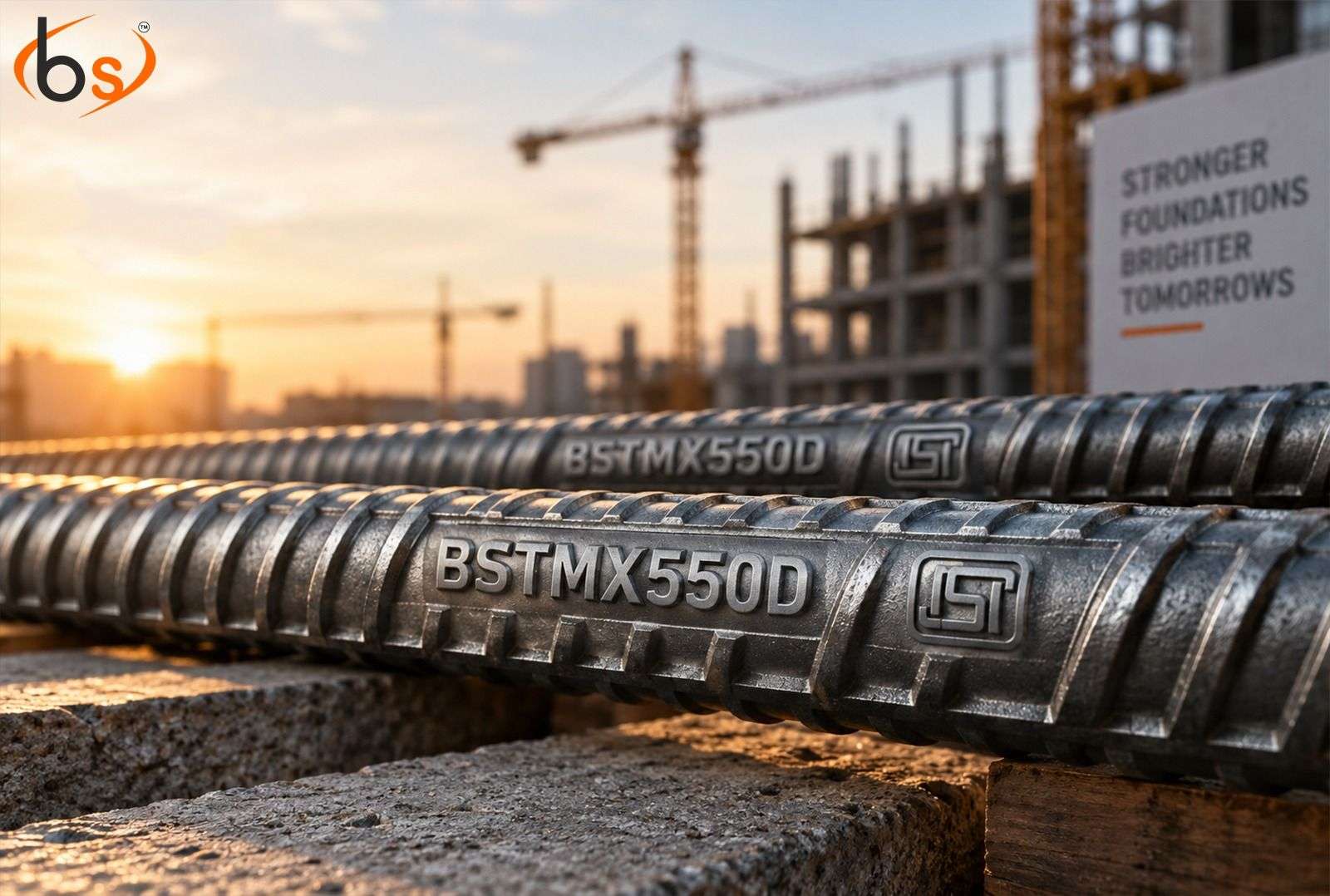
The difference is where this approach stands out. As a fully integrated steel company in Chhattisgarh, we manufacture BSTMX550D TMT bars, which are designed with a yield strength of 550 MPa and certified to IS 1786:2008 and tested for 12% elongation, allowing builders to get the strength and flexibility for high-rise construction needs. BS Group’s single-source, in-house production method guarantees constant quality from raw material to finished bar – so when you build tall, you can trust the foundation you build on.
Similar Blogs:-
Why TMT Bars for High-Rise Buildings Need Higher Tensile Strength
Quality Standards to Check Before Buying MS Pipes from Any Supplier in Chhattisgarh