How MS Pipe is Manufactured: Process and Quality Standards
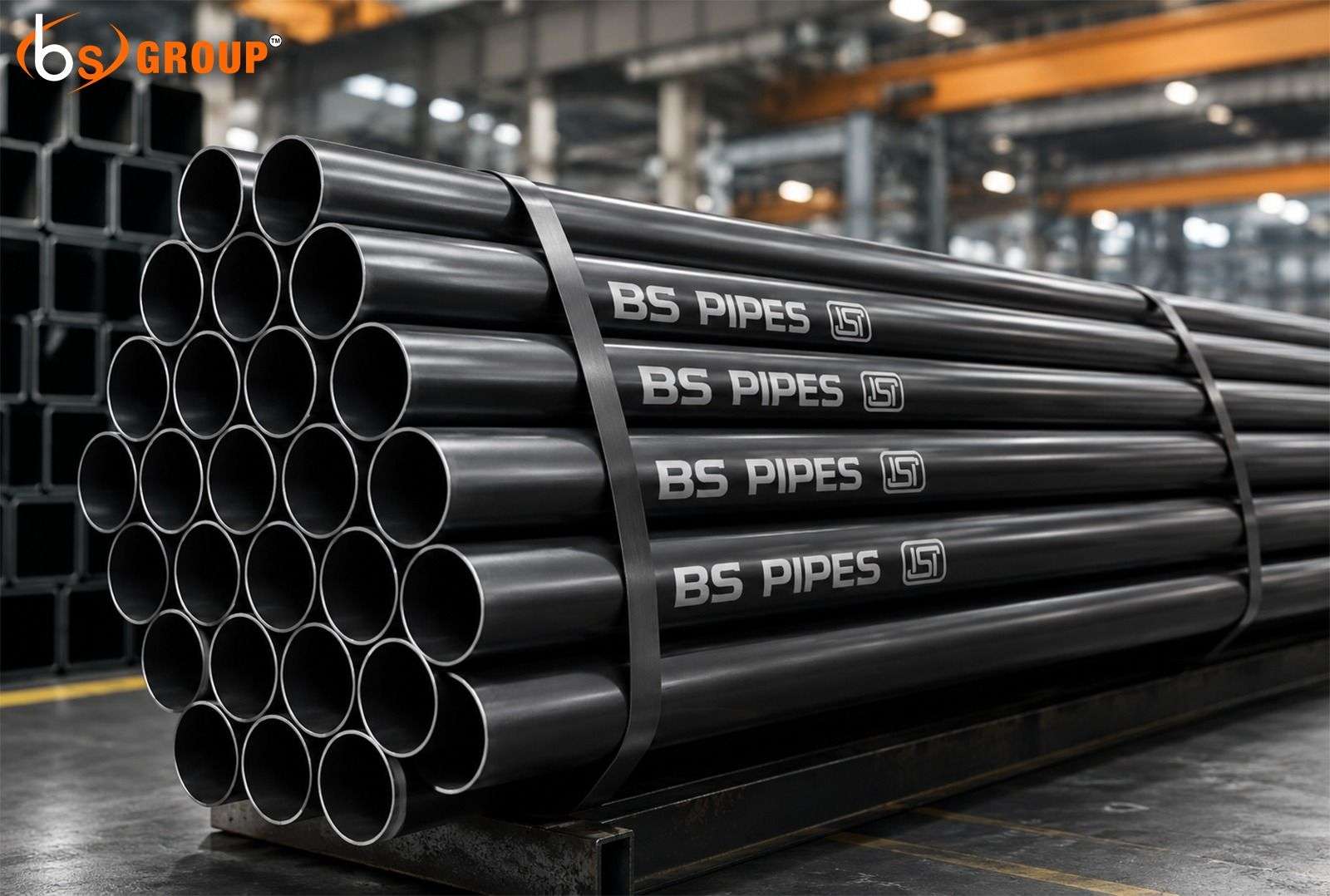
You’ve come to the correct website if you’ve ever wondered what goes into producing the steel pipes that are used on Indian industrial buildings, water lines, and construction sites. One of the most popular materials in Chhattisgarh’s infrastructure and construction industry is MS Pipe (Mild Steel Pipe), and knowing how it is produced will help consumers make more informed purchases. The production process is meant to create pipes that are robust, long-lasting, and dependable for years of use, from the selection of raw materials to the final quality checks.
What is MS Pipe?
MS Pipe is a kind of steel pipe that is mostly composed of iron with a tiny amount of carbon. It is a popular option for structural work, plumbing, fencing, and industrial applications in Chhattisgarh, Odisha, and Madhya Pradesh due to its exceptional strength, flexibility, and weldability.
The Manufacturing Process
- Raw Material Preparation: Billets or hot-rolled steel coils from steel factories are the first step in the process. This raw material is frequently manufactured locally in Chhattisgarh, a region rich in iron ore and home to multiple integrated steel manufacturing facilities. This lowers shipping costs and facilitates quicker turnaround times.
- Slitting the Steel Coil: The steel coil is cut into strips according to the necessary pipe diameter. Because it directly influences the pipe’s ultimate dimensions and wall thickness, accuracy is crucial at this point.
- Forming the Pipe Shape: Depending on whether round MS pipes or square/rectangular hollow sections are being manufactured, the steel strip is gradually bent into a circular or rectangular shape by passing it through a sequence of rollers.
- Welding: High-frequency electric resistance welding (ERW) is used to join the edges of the strip after it has been shaped. As a result, the pipe’s length has a strong, continuous seam. One of the most crucial elements in determining the overall strength of the pipe is the quality of the weld.
- Sizing and Straightening: The pipe goes through size rollers after welding to get the precise diameter and shape needed. After that, any bends or curves created during production are eliminated by straightening it.
- Cutting to Length: The continuous pipe is cut into conventional lengths, usually 6 meters, although depending on the needs of a bulk order, unique lengths may be made.
- Testing and Surface Finishing: Pipes go through several quality tests before packaging, including dimension checks, hydraulic pressure testing, and surface examination for flaws. Additionally, certain pipes are coated to keep them from rusting while being transported and stored.
Quality Standards to Look For
When sourcing MS Pipe in Chhattisgarh, buyers should verify a few key quality markers:
- IS Certification: Pipes manufactured according to Indian Standards (such as IS 1239 or IS 3601) ensure consistent quality and safety.
- Wall Thickness Consistency: Uneven thickness can weaken structural integrity.
- Weld Seam Strength: A clean, uniform weld line indicates proper manufacturing control.
- Surface Finish: Pipes should be free from cracks, scaling, or visible corrosion.
- Accurate Dimensions: Diameter and length should meet the specified tolerances for proper on-site fitting.
Choosing a manufacturer that adheres to these standards ensures the pipes perform reliably in construction, plumbing, and industrial applications, especially in regions like Chhattisgarh, where infrastructure and real estate development are growing rapidly.
Why Local Manufacturing Matters
Builders and contractors can get MS pipes directly from local manufacturers thanks to Chhattisgarh’s status as a center for steel production. This keeps access to pipes that satisfy national quality standards while lowering logistics costs, accelerating delivery times, and boosting the local economy.
Conclusion
To provide a product that builders can rely on, manufacturing MS pipe is a precise, multi-step process that includes mechanical engineering, raw material quality, and stringent quality control. Knowing this procedure makes it easier for anyone seeking pipes for industrial or construction use in Chhattisgarh to select providers who put strength, uniformity, and adherence to Indian norms first.
BS Group provides top-notch MS Pipes produced under stringent quality control, supported by years of steel production experience, to builders, contractors, and distributors in Chhattisgarh, Odisha, and Madhya Pradesh. BS Group is still a dependable partner for building and infrastructure projects throughout the region, in addition to its dependable BSTMX 550D TMT bars. For bulk supplies, affordable prices, and reliable quality that you can build upon, get in touch with BS Group.
Similar Blogs:-
Quality Standards to Check Before Buying MS Pipes from Any Supplier in Chhattisgarh
How to Identify Genuine TMT Bars from Certification, Branding, and Packaging Clues